
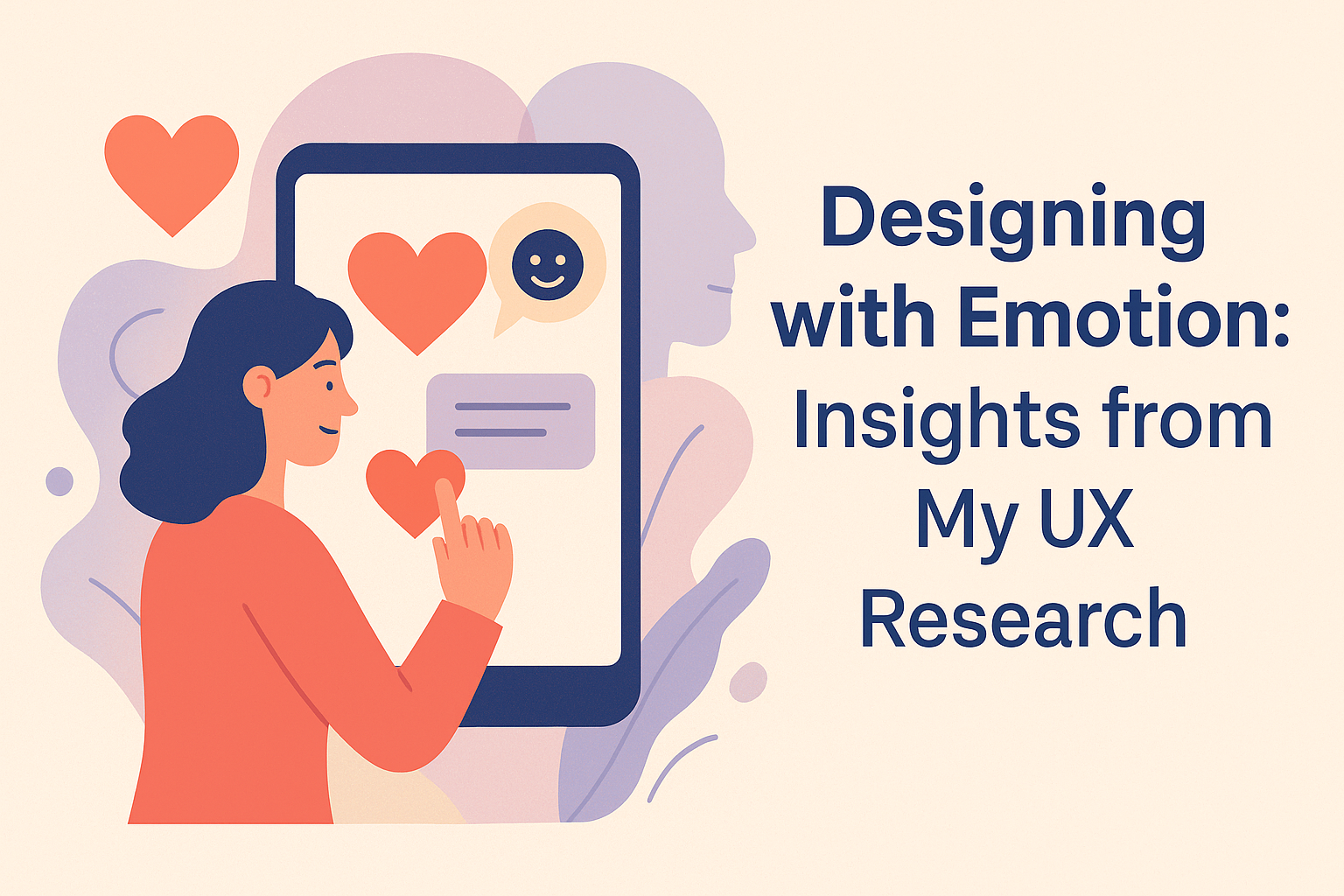
When we talk about user experience, we often focus on usability and functionality. But my research shows that emotions play an equally powerful role. People don’t just use products—they connect with them. And those emotional connections can shape loyalty, trust, and long-term relationships between users and digital platforms.
What I Researched
As part of my Master’s thesis, I studied how digital interfaces can trigger emotions and how these emotional responses affect user behavior. I wanted to go beyond “Does it work?” and ask: “How does it make people feel, and why does that matter?”
My research included a literature review of emotional UX frameworks, user survey responses, and a case study analysis. The results highlight three key insights.
1. Emotions Drive First Impressions
Within the first few seconds of using a website or app, emotions set the stage. A clean layout, warm color palette, or smooth animation can spark feelings of trust and curiosity. On the other hand, confusing navigation or cluttered visuals can create frustration—even before the user interacts deeply with the product.
Takeaway: Small design choices (like colors, tone of microcopy, or even loading animations) have an outsized effect on how users emotionally frame their experience.
2. Emotional UX Builds Loyalty Beyond Utility
Users don’t just return to a product because it works—they return because it feels good to use. My research confirmed that emotional resonance (joy, confidence, belonging) has a long-term effect on loyalty. For example, apps that create a sense of calm or control encourage repeat engagement even if the features are similar to competitors.
Takeaway: Functionality keeps the door open, but emotion keeps users coming back.
3. Negative Emotions Are Hard to Undo
Interestingly, users tend to forgive small usability issues if the overall experience feels positive. But once frustration, confusion, or anxiety sets in, it becomes very difficult to rebuild trust. In my survey, participants mentioned abandoning apps permanently after just one “bad” emotional interaction.
Takeaway: Designing for emotional safety—avoiding frustration, confusion, or exclusion—is as important as delighting users.
Why This Matters for Designers
Emotional UX isn’t about adding more features or flashy visuals. It’s about creating experiences that respect how people feel. If we design interfaces that support positive emotions—confidence, trust, joy—while minimizing negative ones, we create products that people don’t just use, but love.
This aligns with the bigger question of the future of UX: Are we only solving problems, or are we also building meaningful digital relationships?
Closing
My thesis journey reinforced one idea: emotions are not a byproduct of design—they are the design. By considering emotional states as carefully as usability, we can shape experiences that connect on a deeper, more human level.
If you are curious, you can check my blog about my career changing to UX design.
Or, you can explore more about the CAWEB master programs to decide if it suits you.
Pingback: Changing Careers? Here’s How the CAWEB Master’s Program Can Guide Your UX Journey - Linda Le UX